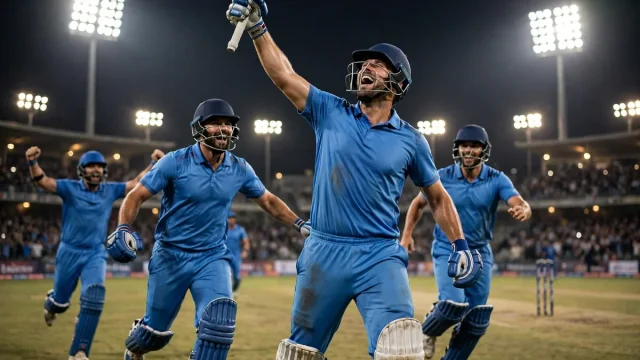

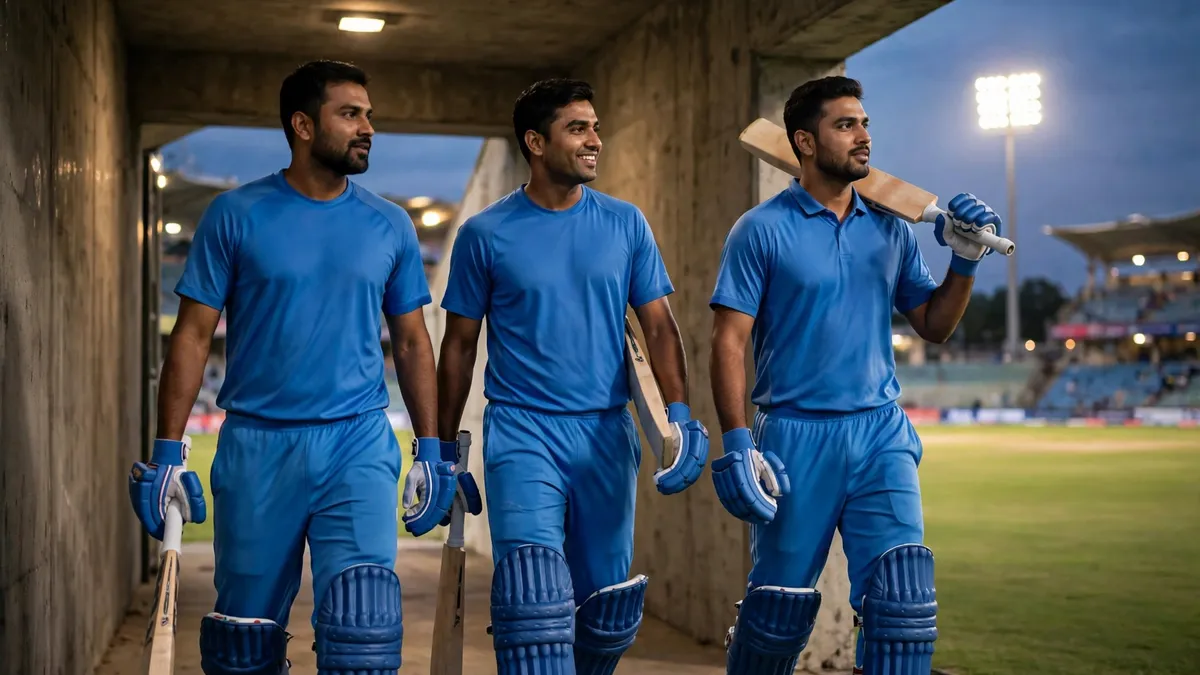
The Kohli Dhawan Rohit T20 2016 India top order was the engine of the most successful year Indian T20 cricket had known. In 2016, India whitewashed Australia 3-0 in Australia, won the Asia Cup in Bangladesh without losing a match, and reached the semi-final of the World T20 on home soil. None of it would have happened without the top three. Virat Kohli had the greatest calendar year any T20I batsman had produced. Rohit Sharma gave India fast starts and a match-winning 83 in the Asia Cup opener. Shikhar Dhawan, often the least celebrated of the three, top-scored in the Sri Lanka series and made a vital 60 in the Asia Cup final. Together, they turned India’s batting from a concern into a weapon.
The numbers tell the story plainly. Kohli scored 641 T20I runs in 2016 at an average of 106.83, the most by any batsman in the world that year. Rohit was third on the same list with 497 runs. Dhawan’s contributions were smaller in total but came at the moments that mattered most. This article looks at each of the three in turn, and at how the trio worked together across the three tournaments that defined India’s year.
Kohli Dhawan Rohit T20 2016 India Top Order: Kohli’s Unmatched Year
Kohli’s 2016 in T20 internationals remains one of the great calendar years in the format. He played 15 matches and 13 innings, scored 641 runs at an average of 106.83 and a strike rate of 140.26, with seven fifties and a highest score of 90 not out. He was dismissed only six times all year. No other batsman came close: Mohammad Shahzad of Afghanistan was second with 520 runs, and Rohit third with 497.
The year began in Australia, where Kohli scored 199 runs in the three-match series: 90 not out at Adelaide, 59 not out at Melbourne and 50 at Sydney. He became the first batsman to score three consecutive fifties in a bilateral T20I series. At the Asia Cup in Bangladesh, he scored 153 runs, second only to Sabbir Rahman’s 176, and at the World T20 he was named Player of the Tournament with 273 runs at an average of 136.50.
The World T20 innings are the ones that endure. Against Pakistan at Kolkata, he made an unbeaten 55 in a chase. Against Australia at Mohali, with India needing 161 to stay in the tournament, he made 82 not out, a chase widely regarded as one of the finest in T20 World Cup history. And in the semi-final against the West Indies at Mumbai, he made 89 not out off 47 balls in a losing cause. Kohli’s 2016 was not just about volume; it was about delivering in the matches that decided tournaments.
Rohit Sharma: The Fast Starts and the Asia Cup Opener
Rohit’s 2016 was quieter than Kohli’s but just as important. He played 18 T20Is, scored 497 runs at an average of 29.23 and a strike rate of 131.48, with a highest score of 83. His job was different from Kohli’s: he opened the batting, took the risks in the powerplay, and gave India the fast starts that allowed the middle order to play with freedom.
His best innings of the year came in the Asia Cup opener against Bangladesh at Mirpur on 24 February. India were 42 for 3 when he took control, and he went on to make 83 off 55 balls with seven fours and three sixes, the highest individual score of the main tournament. He had been dropped on 21 by Shakib Al Hasan, and he made Bangladesh pay, adding 55 with Yuvraj Singh and 61 with Hardik Pandya. India posted 166 for 6 and won by 45 runs. It was the innings that set the tone for India’s unbeaten run to the title.
In Australia, Rohit scored 143 runs in the T20I series, including 52 off 38 balls in the deciding match at Sydney, where India chased 198 to complete the whitewash. His opening partnership with Dhawan was the platform for everything that followed: when the openers fired, India’s middle order could play without pressure, and when they failed, as they did at Pune against Sri Lanka, the whole innings could unravel.
Shikhar Dhawan: The Underrated Third Man
Dhawan’s 2016 is the hardest of the three to capture in a single number, because his best contributions came in short, sharp bursts at decisive moments. In the Sri Lanka series in February, he was the top scorer with 106 runs at an average of 53, including 51 off 25 balls at Ranchi that set up India’s series-levelling win. In the Asia Cup final against Bangladesh on 6 March, he top-scored with 60 off 44 balls as India chased 121 in a rain-shortened 15-over match and won by eight wickets.
At the World T20, Dhawan’s contributions were smaller, but he remained a fixture at the top of the order and his left-handed presence at the top gave India’s batting its balance. In the Sydney decider against Australia, he made 26 off 9 balls, a cameo that helped India keep up with a demanding asking rate. Dhawan’s role in the trio was to be the aggressor who took the pressure off Rohit and Kohli, and in 2016 he did it often enough to matter.
The Australia Tour: Where the Trio Came Together
The three-match T20I series in Australia in January 2016 was where the top order first showed what it could do as a unit. India won the series 3-0, becoming the first team to whitewash Australia in Australia in T20 internationals, and the victory took India to number one in the T20I rankings.
The deciding match at Sydney on 31 January was the trio’s finest collective hour. Australia posted 197 for 5, built on Shane Watson’s unbeaten 124 off 71 balls, his maiden T20I hundred. India chased it down with seven wickets in hand and off the last ball: Rohit made 52 off 38, Kohli 50 off 36, Raina 49 not out off 25 and Dhawan 26 off 9. With 17 needed off the final over, Yuvraj Singh hit a four and then a six off the first two balls from Andrew Tye, and Suresh Raina hit the winning four off the last ball. It was a chase that showed the depth of India’s batting, and the top three had done the heavy lifting.
The ODI series on the same tour had gone the other way, Australia winning 4-1, but Rohit had been the Player of the ODI Series with 441 runs. The message was clear: India’s batting was the best in the world in white-ball cricket, and the T20 side was built to chase anything.
Why the Kohli Dhawan Rohit T20 2016 India Top Order Worked
The trio worked because the three batsmen did different jobs. Rohit took the risks in the powerplay and set the tempo. Dhawan attacked from the other end and kept the scoreboard moving. Kohli, batting at number three, was the anchor and the finisher, the batsman who could rebuild after early wickets or accelerate at the death. Together they covered every phase of a T20 innings, and they did it in a year when India played more high-stakes T20 cricket than ever before.
The year ended in disappointment, with the semi-final defeat to the West Indies at the World T20, but the top order’s legacy was secure. Kohli’s 641 runs in a calendar year, Rohit’s 497 and Dhawan’s match-winning contributions had taken India to number one in the world and to the brink of a home World Cup title. For more on the tournaments they played, see our guide to the ICC Men’s T20 World Cup 2022 and our comparison of Virat Kohli vs Rohit Sharma.
| T20I runs in 2016 | Matches | Runs | Average | Strike rate |
|---|---|---|---|---|
| Virat Kohli | 15 | 641 | 106.83 | 140.26 |
| Mohammad Shahzad | — | 520 | — | — |
| Rohit Sharma | 18 | 497 | 29.23 | 131.48 |
| Sabbir Rahman | 16 | 463 | — | — |
| Glenn Maxwell | — | 435 | — | — |
Sources: espncricinfo.com, sports.ndtv.com, en.wikipedia.org.