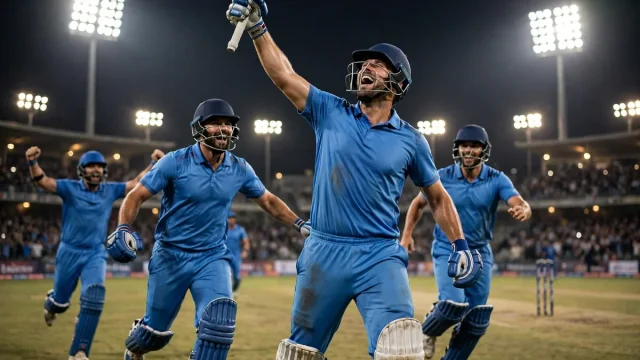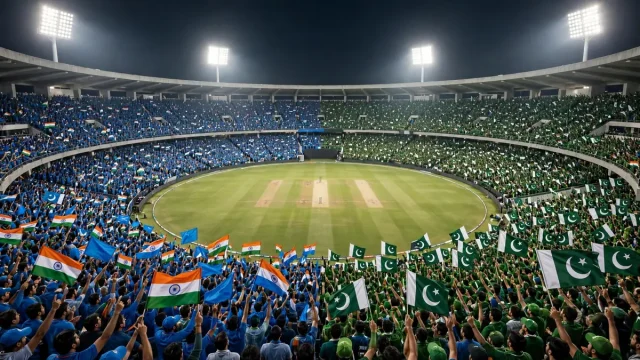

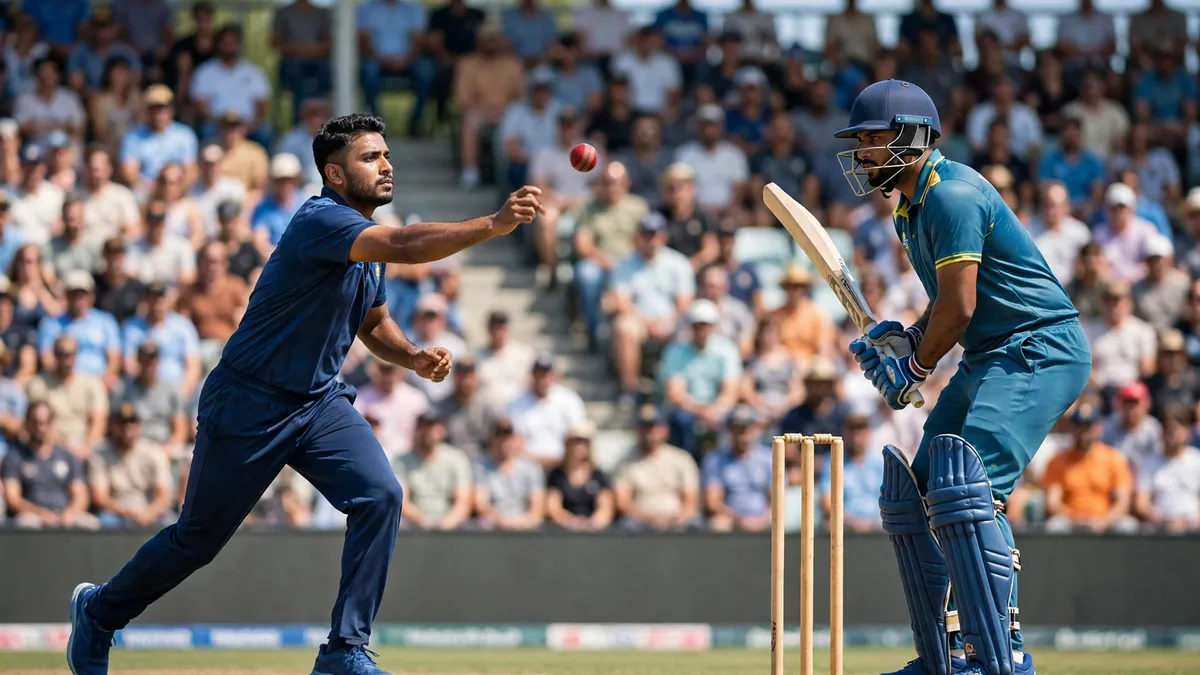
The India vs Sri Lanka T20 series 2016 was a three-match contest played between 9 and 14 February 2016, and it produced one of the most dramatic short series of the year. Sri Lanka won the opener at Pune by five wickets after bowling India out for 101. India hit back at Ranchi, winning by 69 runs, and then sealed the series at Visakhapatnam with a nine-wicket win after bowling Sri Lanka out for 82. India took the series 2-1 and held on to the number one ranking in T20 internationals, but the scorelines only tell half the story: each match was decided by a different set of players, and the series doubled as the final rehearsal for both teams before the World T20 on home soil.
This article sets out the whole series in one place: the three results, the players who shaped them, the teams that took the field, and the moments that turned each match. It is a record of the series, not a broadcast guide, and every figure below is taken from the official scorecards.
India vs Sri Lanka T20 Series 2016: The Three Results
The series opened at Pune on 9 February with a shock. India, batting first, were bowled out for 101, with Ravichandran Ashwin’s unbeaten 31 the top score. Sri Lanka chased the target down for the loss of five wickets, Dinesh Chandimal making 35 and Dasun Shanaka taking 3 for 16 with the ball. It was a famous win for the visitors and it put India under real pressure.
The second match at Ranchi on 12 February swung the series back. Shikhar Dhawan smashed 51 off 25 balls and Rohit Sharma made 43 as India posted 196 for 6, despite Thisara Perera’s hat-trick in the final over. Sri Lanka were then held to 127 for 9, Ashwin taking 3 for 14, and India won by 69 runs to level the series 1-1. For a match-by-match account, see our recap of the India vs Sri Lanka 2nd T20 2016 at Ranchi.
The decider at Visakhapatnam on 14 February was one-sided. Sri Lanka were bowled out for 82, their lowest T20I total at the time, with Ashwin taking 4 for 8. India chased the target down for the loss of one wicket, Dhawan unbeaten on 46 and Ajinkya Rahane unbeaten on 22, winning by nine wickets and the series 2-1.
| Match | Date | Venue | Result |
|---|---|---|---|
| 1st T20I | 9 Feb 2016 | Pune | Sri Lanka won by 5 wickets |
| 2nd T20I | 12 Feb 2016 | Ranchi | India won by 69 runs |
| 3rd T20I | 14 Feb 2016 | Visakhapatnam | India won by 9 wickets |
The Teams That Played at Ranchi
The second match at Ranchi gives the clearest picture of the two sides, because both teams fielded their strongest available elevens. India’s XI was Rohit Sharma, Shikhar Dhawan, Ajinkya Rahane, Suresh Raina, Hardik Pandya, MS Dhoni as captain and wicketkeeper, Yuvraj Singh, Ravindra Jadeja, Ravichandran Ashwin, Ashish Nehra and Jasprit Bumrah. Virat Kohli was rested for the whole series, which is why Rahane batted at number three.
Sri Lanka’s XI at Ranchi was Danushka Gunathilaka, Tillakaratne Dilshan, Seekkuge Prasanna, Dinesh Chandimal as captain and wicketkeeper, Chamara Kapugedera, Milinda Siriwardana, Dasun Shanaka, Thisara Perera, Sachithra Senanayake, Dushmantha Chameera and Kasun Rajitha. The team was led by Chandimal, with Angelo Mathews not captaining the side in this series.
India vs Sri Lanka T20 Series 2016: The Players Who Decided It
Two Indian players decided the series. Ashwin took nine wickets across the three matches and was named Player of the Series. His figures were remarkable for their control: after his unbeaten 31 with the bat at Pune, he took 3 for 14 at Ranchi and 4 for 8 at Visakhapatnam. He was the bowler both teams planned around, and Sri Lanka never found an answer to him on the two flatter surfaces.
Dhawan finished as the series’ top scorer with 106 runs at an average of 53. His 51 off 25 balls at Ranchi was the innings that saved the series, and his unbeaten 46 at Visakhapatnam finished it. The opening pair of Rohit and Dhawan gave India the fast starts that had been missing in Pune, and their partnership was the platform for both wins.
For Sri Lanka, Chandimal led from the front with 35 at Pune and 31 at Ranchi, and he captained the side throughout. Shanaka announced himself with 3 for 16 at Pune and a quick 27 at Ranchi, while Perera’s hat-trick at Ranchi was the single most dramatic moment of the series. It made him only the fourth bowler to take a hat-trick in T20 internationals, after Brett Lee, Jacob Oram and Tim Southee, and the first Sri Lankan and first Asian to do it.
The Moments That Turned Each Match
At Pune, the turning point came early. India lost wickets in clusters against the moving ball and never recovered, and Ashwin’s unbeaten 31 was the only innings of substance. Sri Lanka’s chase was never comfortable, but Chandimal’s 35 saw them home with five wickets in hand.
At Ranchi, the turning point was the opening partnership. Dhawan and Rohit added 75 in 6.6 overs, and by the time both were out, India had the platform for a total close to 200. Perera’s hat-trick in the final over kept the total to 196, but Sri Lanka’s chase was over as a contest within the first few overs, when Nehra and Ashwin removed Gunathilaka and Dilshan cheaply.
At Visakhapatnam, the turning point was Ashwin’s spell. Sri Lanka were bowled out for 82, and the chase was a formality. The match lasted barely more than two hours of cricket, and it confirmed the gap between the sides on a surface that suited India’s spinners.
What the Series Meant
The series mattered for the rankings and for the World T20 that followed. India entered the series as the world’s top-ranked T20I side with 120 points, and after the 2-1 win they held on to the top spot with 122 points. Sri Lanka, who would have taken the number one ranking with a series win, stayed fourth on 116 points. The full story of the ranking battle is covered in our analysis of the India Sri Lanka T20 series and the No. 1 ranking.
For India, the series was the final rehearsal before the Asia Cup and the World T20, and it confirmed the winning formula: fast starts from the openers, control from Ashwin and Jadeja, and death bowling from Bumrah and Nehra. For Sri Lanka, it was an honest preview of the World T20, where they won only one of their four Super 10 games. The three matches in February 2016 were short, sharp and revealing, and they set the tone for everything that followed that spring.
Sources: cricinfo.com, cricbuzz.com, en.wikipedia.org.