Australian Sandpaper Scandal Explained: What Happened in 2018 and Why It Is Back in the News
 By Anil Administrator8 min readUpdated November 28, 2026 2:11 am
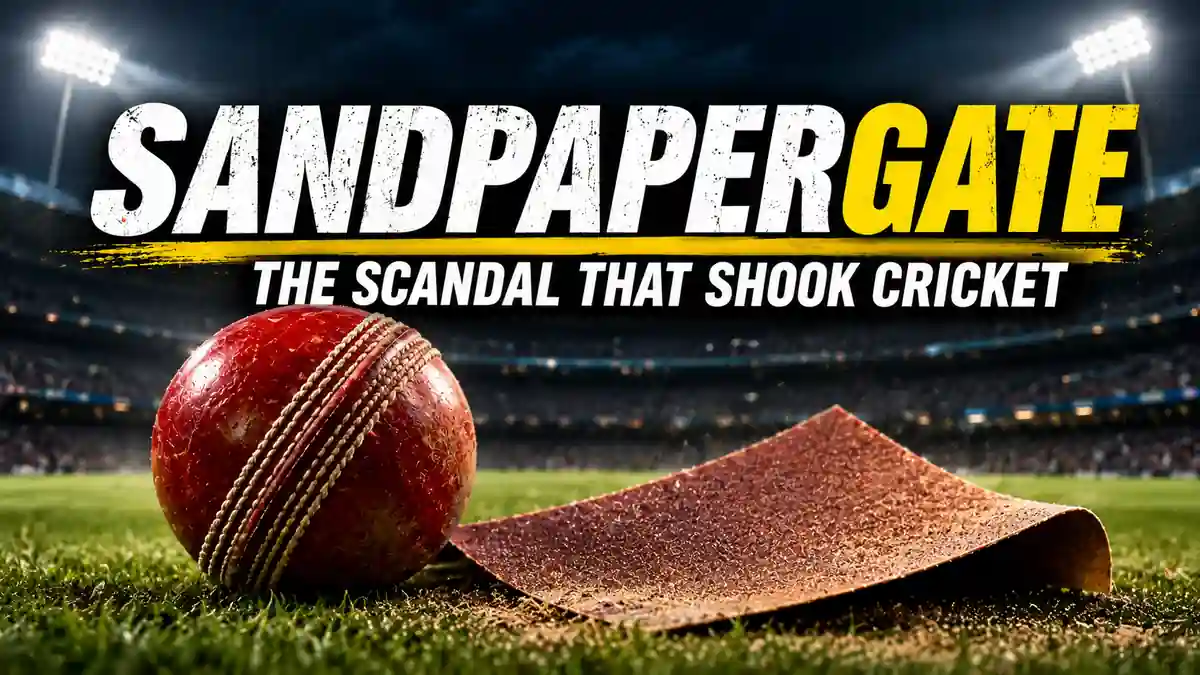
AI-generated illustration
The Australian sandpaper scandal is back in the news eight years after it first shook cricket — and the questions are the same as in 2018: what happened, who was involved, and why it matters. In March 2018, Cameron Bancroft was caught on television rubbing a cricket ball with sandpaper during a Test in Cape Town; captain Steve Smith admitted the team’s “leadership group” had planned it; and Cricket Australia banned Smith and David Warner for a year and Bancroft for nine months. In November 2026, Usman Khawaja’s autobiography and Bancroft’s statement reopened it, and a fresh allegation involving Nathan Lyon dragged it back into the headlines.
What Is the Australian Sandpaper Scandal?
The Australian sandpaper scandal — often called the sandpaper gate scandal, or by its formal name, the 2018 Australian ball tampering scandal — is the ball-tampering incident in the third Test between South Africa and Australia at Newlands, Cape Town, in March 2018. People search for it under many names — the cricket sandpaper scandal, the sandpaper cricket scandal, sandpaper gate — but they all describe the same event, which cost the captain and vice-captain their jobs and a year.
How Bancroft Was Caught on Camera
With the series level at 1–1, the third Test began on 22 March 2018 at Newlands. On 24 March, after the 43rd over of South Africa’s second innings, television cameras showed Bancroft rubbing the ball with a small yellow object. Realising he had been spotted, he hid it down his trousers, then showed the umpires a dark sunglasses pouch instead. They inspected the ball and chose neither to replace it nor to award five penalty runs.
The Admission
The object was sandpaper, meant to rough up one side of the ball so it would swing. At the close of play, Bancroft and Smith admitted trying to alter the ball’s condition — first claiming sticky tape with dirt and grit, later established as sandpaper. Smith said the plan was put together by the team’s “leadership group” and insisted the coaching staff, including head coach Darren Lehmann, had no knowledge of it.
The Match at the Centre of It: 3rd Test Scorecard
3rd Test, Newlands, Cape Town, 22–25 March 2018 — South Africa vs Australia
| 1st innings | 2nd innings | |
|---|---|---|
| South Africa | 311 | 373 |
| Australia | 255 | 107 |
Result: South Africa won by 322 runs. Dean Elgar carried his bat for 141 not out; Bancroft top-scored for Australia with 77; Morne Morkel took 5 for 23 and was Player of the Match. South Africa went 2–1 up in the series, which they won 3–1.
Who Was Involved in the Sandpaper Scandal?
The three players punished were Steve Smith, David Warner and Cameron Bancroft — captain, vice-captain, and the player caught on camera. The question of who else knew has never been settled — and it is driving the story again.
How They Were Punished
The ICC moved first and lightly: Smith was banned for one match and fined his entire match fee; Bancroft was fined 75 percent of his and given three demerit points. Cricket Australia’s punishment was far heavier: Smith and Warner were banned for 12 months from all cricket, and Bancroft for nine months. Warner also received a lifetime leadership ban, lifted on 24 October 2024. Lehmann, found not directly involved, stepped down as head coach; Tim Paine took over as Test captain and Aaron Finch as limited-overs captain.
The Question That Never Went Away
Cricket Australia’s 2018 investigation named the three as responsible, and a separate review found a culture that put winning above sound ethics. Neither established the wider knowledge now alleged by Khawaja and Bancroft. The four bowlers issued a public denial: in 2021, Pat Cummins, Mitchell Starc, Josh Hazlewood and Nathan Lyon said they “did not know a foreign substance was taken onto the field to alter the condition of the ball until we saw the images on the big screen at Newlands”.
Why Is the Australian Sandpaper Scandal Back in the News?
The Australian sandpaper scandal returned to the headlines in November 2026 with Usman Khawaja’s autobiography, Sabr. Khawaja, who retired from international cricket in January 2026, wrote that the whole team had known about the sandpaper plan. “It was all of us,” he told the Nine newspapers. “Not the batters, not the bowlers, not the staff. All of us.” He claimed sandpaper had also been used in the second Test at Port Elizabeth, where Bancroft volunteered, and during the 2017–18 Ashes. He said Cricket Australia’s investigator had never interviewed him, despite sitting next to Bancroft throughout that Test, and that he had briefed Cummins and chief executive Todd Greenberg.
Warner Backs Khawaja, Cummins Denies It
Warner backed Khawaja’s version, as did former fast bowler Chadd Sayers. Cummins firmly denied it in a 68-minute press conference; Mitchell Starc and Josh Hazlewood have maintained they knew nothing.
Bancroft Breaks His Silence
Then, on 18 November, Bancroft broke his silence with a statement of over 4,000 words in The West Australian. “It was not just the three of us — Steve Smith, David Warner and I — who knew about me using sandpaper on the ball in South Africa. It was the whole team,” he wrote. He admitted withholding the full truth — when it began, how long it went on, and who else knew — to protect others, and said the wider team and coaching staff had been aware. He wrote that Khawaja’s book and Cummins’ denials forced him to come clean, leaving him “angry, betrayed and alone”.
Nathan Lyon Ball Tampering: The Dubai Mints Allegation
Whateley’s investigation brought the new Nathan Lyon ball tampering allegation into the open. According to reports, it happened during the first Test against Pakistan in Dubai, from 7 to 11 October 2018 — about six months after Cape Town — when Australia’s bowlers were struggling for movement on a flat pitch. The match ended in a draw.
The Mints Suggestion
The allegation is that Lyon, the team’s senior spinner, suggested using breath mints to shine the ball, and that a player fetch them from the dressing room. Khawaja confirmed on The Grade Cricketer podcast, without naming anyone, that a senior player had made the suggestion and had been on the South Africa tour. On Friday, 27 November 2026, a News Corp report, quoted by The West Australian, named Lyon as that player.
Head Objected, Paine Stopped It
Travis Head, on Test debut alongside Marnus Labuschagne and Aaron Finch, was named in subsequent reports as the player who objected most forcefully. Captain Tim Paine intervened and stopped it before anything was used. Khawaja recalled coach Justin Langer reprimanding the player responsible and then the whole team, warning: “If any of you guys ever even think about this again, you will not play for Australia again.” Whether Lyon’s remark was serious or a joke remains unresolved, and no formal Cricket Australia disciplinary process has been confirmed.
To be clear: nobody says Lyon tampered with a ball, used mints, or was involved in Cape Town — only that he floated an idea that was shut down on the spot.
What Is Sandpaper and Why Is It Illegal in Cricket?
Sandpaper is an abrasive material: rubbed against one side of a cricket ball, it roughs up the surface so that side wears faster and the ball swings. Under the Laws of Cricket, players cannot apply artificial substances to change the ball’s condition.
In 2018, polishing the ball with natural saliva was allowed, but applying mint or sugar residue was not — and eating a mint to produce more saliva is not the same as rubbing residue onto the ball. The ICC later banned saliva itself as a COVID-19 measure in 2020, and the ban became permanent from 1 October 2022.
What Happens Next: Cricket Australia’s Independent Forum
Cricket Australia’s independent forum, overseen by barrister Fiona McLeod, runs six weeks and is not a disciplinary investigation. It will not determine individual responsibility, make adverse findings, revisit previous sanctions or recommend retrospective punishment — but its scope covers ball-management practices in the 2017–18 Ashes, all four South Africa Tests, and the 2018 investigation. Cricket Australia has confirmed the full report will be published, and it will respond within 30 days; individual accounts will stay private.
Meanwhile, Cricket Moves On
Australia are currently hosting England in a home T20I series, and Lyon has been left out of the home Test squad against New Zealand — with no suggestion his omission is connected to the mints allegation. The Test game itself has moved on — South Africa currently top the World Test Championship table after sweeping Bangladesh 2–0.
What We Know So Far
Smith, Warner and Bancroft served their bans — Warner’s separate leadership ban was lifted in 2024. Khawaja and Bancroft say the whole team knew; Cummins, Starc and Hazlewood say they knew nothing. The Lyon allegation is separate from Cape Town: a suggestion, stopped on the spot. Eight years on, it is no longer just about a piece of sandpaper. It is about who knew, who said nothing, and whether Australian cricket has really changed.
Sources: cricinfo.com, wisden.com, scmp.com, skysports.com, tribune.com.pk, sports.ndtv.com, en.wikipedia.org, aljazeera.com, m.cricbuzz.com, aapnews.aap.com.au, foxsports.com.au, cricinfo.com.